Showing posts with label miguel calo. Show all posts

Thursday, February 1, 2018

El Bazar de los Juguetes (The Toy Store)

Tango 1954
Music: Roberto Rufino, Alberto Podestá
Lyrics: Reinaldo Yiso
Orchestra: Miguel Caló
Singer: Alberto Podestá
This performance: Buenos Aires, May 5,1954 - Odeon Disco Nacional No. 55937 19474


Curated and Translated by Luigi Seta


Tango Talks! (El tango nos habla)


Esta letra de Reinaldo Yiso, siempre cala muy hondo entre aquellos que en su niñez han tenido que convivir con la pobreza a su lado. Es un bello poema que describe cuantas veces, cuantas caritas de niños tristes han tenido que resignarse a tener ese pequeño juguete que soñaban.

This lyrics by Reinaldo Yiso, always goes deep among those who in their childhood have had to coexist side to side with poverty. It is a beautiful poem that describes how many times, how many little faces of sad children have had to resign themselves to having that little toy they dreamed.


A la belleza de la letra, se le suma una creación musical no menos bella, que como curiosidad fue realizada por dos excelentes cantantes, los Maestros Roberto Rufino y Alberto Podestá.

To the beauty of the lyrics, a musical creation is added no less beautiful, that as curiosity it was made by two excellent singers, the Maestros Roberto Rufino and Alberto Podestá.

Ahora dejémonos enternecer al escuchar este tango…
Now let’s be touched when listening to this tango...


Acerca del cantor Alberto Podestá / About the singer Alberto Podestá


Dijo en una entrevista reciente “Las cuatro primeras obras que grabé con Miguel Caló lo hice con el nombre de Juan Carlos Morel, ya que había otros cantores con el apellido Podestá, que es el de mi madre, Caló no quiso entrar en competencia de apellidos.”


He said in a recent interview: “The first four works that I recorded with Miguel Caló I did with the name Juan Carlos Morel, as there were other singers with surname Podesta, who is my mother, Caló didn't want to go into competition surnames.”


Actuaba en el viejo cabaret Singapur, ubicado en Corrientes y Montevideo. Yo vivía en la calle Piedras casi esquina Alsina. Entre uno y otro lugar los primeros viajes los hacía en tranvía. Luego que comencé a ganar las primeras “rupias” lo hice en taxi.”
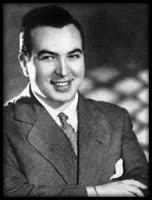


I performed in the old Singapore cabaret, located in Corrientes Avenue and Montevideo Street. I used to lived on the Piedras Street at the corner of Alsina Street. In between the places I first travelled by tramway. Then when I started winning the first "rupee" (slang for money) I did ride taxis."


En 2007 fue declarado Ciudadano Ilustre de la Ciudad de Buenos Aires en el Salón Dorado de la Legislatura Porteña. En 2008, fue convocado por el director Miguel Kohan para protagonizar el proyecto cinematográfico Café de los maestros, con el que cantó en el Teatro Colón, Teatro Argentino y el Luna Park.


In 2007 he was declared Illustrious Citizen of Buenos Aires in the Golden Hall of the City Legislature. In 2008, he was called by director Miguel Kohan to star in the film project Café of the Maestros, with whom he sang at the Teatro Colón, Teatro Argentino and the Luna Park.


Él fue una de las últimas leyendas vivientes de la Época de Oro. En los últimos años, a pesar de nunca haber dejado su carrera, continuó con presentaciones en recitales esporádicos y participando varias orquestas de músicos jóvenes. Alberto Podestá nos dejo fisicamente el 9 de diciembre de 2015 a los 91 años de edad. Pero sigue vivo en nuestros corazones!


He was one of the last living legends of the Golden Age. In recent years, despite never having left his career, he continued with appearances in sporadic recitals and participating in several orchestras of young musicians. Alberto Podestá physically left us on December 9, 2015 at 91 years of age. But still alive in our hearts!


El Bazar de los Juguetes
Tango - 1954


Castellano:


Patrón cierre la puerta, porqué mira asombrado,
le compro los juguetes que tiene en el bazar.
Yo se los compro todos, no importa lo que gasto,
dinero no me falta para poder pagar.
Por una sola noche yo quiero ser rey mago,
para que los purretes de todo el arrabal
mañana al despertarse aprieten en sus manos
el sol de esta alegría que yo les quiero dar.


Al bazar de los juguetes,
cuantas veces de purrete,
me acercaba para ver.
Para ver de allí, de afuera,
desde atrás de esa vidriera
lo que nunca iba a tener.
Si mi vieja era tan pobre
le faltaba siempre un cobre
para comprarnos el pan.
Y hoy que puedo,
que la suerte me sonríe,
yo no quiero que haya un pibe
que no tenga
ni un juguete pa' jugar.


Yo sé lo que es sentirse en una Nochebuena,
teniendo por regalo un solo cacho 'e pan,
sabiendo que los otros, cruzando la vereda,
dejaban sus juguetes allí, en medio del zaguán.
Yo sé lo que es sentirse besado tiernamente
por una pobre madre que no me pudo dar
ni el más humilde y pobre de todos los juguetes
por eso se los compro por eso nada más.
English:


Mister, close the door, why you look at me in amazement,
I buy all the toys you have in the store.
I buy them all, no matter what I spend,
I have enough the money to pay.
For only one night I want to be one of the Wise Men,
so the kids of the suburb
tomorrow, when they wake up, can hold
this joy that I want to give them.


To the toy store,
how many times, as a kid,
I approached to see...
To see from there, from the outside,
from behind that window
what I would never have.
If my old lady was so poor
she always lacked a penny
to buy us bread.
And today that I can,
that luck smiles at me,
I do not want even one kid
not having
a toy to play.


I know what it feels like to be on a Christmas Eve,
having as a gift a single piece of bread,
knowing that the others, crossing the street,
they left their toys there, in the middle of the house.
I know what it is to feel tenderly kissed
for a poor mother who could not give me
nor the most humble and poor of all the toys
that's why I buy them all,  for that, nothing else.


Danced by Amanda and Adrián Costa


Amanda y Adrián Costa son unos de los intérpretes y maestros de tango argentino más influyentes y queridos del estilo Villa Urquiza.

Ellos transmiten con pasión y autenticidad este patrimonio, así como los aspectos socioculturales del baile del tango de salón: estudio de su música, códigos e historia.

Su estilo dinámico de baile, lleno de delicadeza y gracia, es el resultado de un trabajo de notable tecnicismo y musicalidad.

Fondation Villa Urquiza
2013 - France

Amanda and Adrián Costa are some of the most influential and beloved Argentinian tango masters and interpreters of the Villa Urquiza style.
They transmit this heritage with passion and authenticity, as well as the socio-cultural aspects of tango de salon dance: study of its music, codigos and history.

His dynamic style of dance, full of delicacy and grace, is the result of a work of remarkable technicality and musicality.


© Luigi Seta


Sunday, September 14, 2014

Un Infierno (A Hell)

Tango

Music: Francisco Rotundo
Lyrics: Reinaldo Yiso
Orchestra: Miguel Caló
Singer: Alberto Podestá
This performance: May 5 1954 -  Buenos Aires - Odeon 55937 19473

Curated and Translated by Luigi Seta


Tango Talks!  El tango nos habla.

Este tango nos cuenta una historia de amor y traición... Cuando el amor duele y no desaparece...Y cuando a pesar nuestro perdonamos y amamos mucho más.... Ironía cruel del destino.


This tango tells us a story of love and betrayal... When love hurts and does not go away... And when despite ourselves we forgive to love much more.... What a cruel irony of fate!


Acerca del cantor Alberto Podestá / About the singer Alberto Podestá

Dijo en una entrevista reciente “Las cuatro primeras obras que grabé con Miguel CFló lo hice con el nombre de Juan Carlos Morel, ya que había otros cantores con el apellido Podestá, que es el de mi madre, Caló no quiso entrar en competencia de apellidos.

He said in a recent interview: “The first four works that I recorded with Miguel Caló I did with the name Juan Carlos Morel, as there were other singers with surname Podesta, who is my mother, Caló didn't want to go into competition surnames.

Actuaba en el viejo cabaret Singapur, ubicado en Corrientes y Montevideo. Yo vivía en la calle Piedras casi esquina Alsina. Entre uno y otro lugar los primeros viajes los hacía en tranvía. Luego que comencé a ganar las primeras “rupias” lo hice en taxi.”


I performed in the old Singapore cabaret, located in Corrientes Avenue and Montevideo Street. I used to lived on the Piedras street at the corner of Alsina street. In between the places I first travelled by tramway. Then when I started winning the first "rupee" (slang for money) I did ride taxis."

En 2007 fue declarado Ciudadano Ilustre de la Ciudad de Buenos Aires en el Salón Dorado de la Legislatura Porteña. En 2008, fue convocado por el director Miguel Kohan para protagonizar el proyecto cinematográfico Café de los maestros, con el que cantó en el Teatro Colón, Teatro Argentino y el Luna Park.

In 2007 he was declared Illustrious Citizen of Buenos Aires in the Golden Hall of the City Legislature. In 2008, he was called by director Miguel Kohan to star in the film project Café of the Maestros, with whom he sang at the Teatro Colón, Teatro Argentino and the Luna Park.

Él es una de las últimas leyendas vivientes de la Época de Oro. Está próximo a cumplir los 90 años. Gracias Maestro and Feliz Cumple! Actualización: El Maestro Podestá falleció el 9 de diciembre de 2015, a la edad de 91 años y nos sonríe a todos los tangueros desde el Cielo del Tango.

He is one of the last living legends of the Golden Age. It is about to turn 90. Thanks Maestro and Happy B-Day! Update: Maestro Podestá passed away on Dec 9, 2015, at the age of 91 y/o, and is smiling to all tangueros from the Tango Heaven.

Un Infierno


Castellano:


El agravio de tus labios, que juraron y engañaron,
embeleso de tu beso donde preso me quedé.
Un zarpazo fue tu abrazo y tu piel de seda y raso,
un infierno cruel y eterno donde el alma me quemé.
El hastío con su frío hizo nido en todo mío,
si quererte fue la muerte, el perderte es morir más.

Que misterio es el cariño que en la cruz de tu abandono,
todavía te perdono y te quiero mucho más.


Clavaste
sin temor, con toda tu alma,
a traición y por la espalda
un puñal, ¿y para qué?
No ves
que estoy herido y te sonrío
que aún te llamo cielo mío
y que aún beso tu puñal.
¡No lo ves,
que pese a todo y contra todo
en el cielo o en el lodo
yo te quiero siempre igual!


*Maldecirte, no seguirte, no quererte, aborrecerte,
libertarme de tus manos, rosa fresca, no podré.
Como un ciego tambaleo sin tu voz, sin tu sonrisa,
cielo y brisa, tierra y todo, me recuerda tu querer.
Siempre arde, noche y tarde, esa antorcha de tus ojos
en tu pelo soy abrojo que pretende ser clavel,
como hiedra que se aferra a la piedra inevitable,
de tu amor inolvidable aferrado me quedé.
English


The grievance of your lips, who swore and cheated,
captivation of your kisses where I kept prisoner.
A blow was your embrace and your skin of Silk and Satin
a cruel and eternal hell where my soul burned.
The ennui with its cold made its nest in my inner self,
if loving you was death, losing is dying more.

What mystery is the affection that in the cross of your neglect,
I'm still forgiving and loving you much more.


You nailed
without fear, with all your soul,
by treason and in the back
a dagger, and for what?
Not you see
that I'm hurt and smile to you
that still calling you my darling
and still kissing your dagger.
Don’t you see,
that despite everything and all
in heaven or in the mud
I love you always the same!


*Cursing you, not following you, not loving you, hating you,
freeing myself from your hands, fresh rose... I can’t.
Like a blind I stagger without your voice, without your smile,
sky and breeze, land and everything reminds me of your love.
Always burns, night and evening, that torch of your eyes
in your hair I'm the caltrop pretending to be carnation
as ivy that clings to the inevitable stone,
grasped to your unforgettable love.


*Esta parte de la letra no se encuentra en esta versión de Podestá, pero completa el mensaje del tango.
*This part of the lyrics is not included in this Podestá’s version, but completes the tango's message.


Ahora veamos como se baila con toda la elegancia, sentimiento y pasón contenida para interpretar el mensaje de este tango como sólo Roxana  Suarez y Sebastian Achaval saben hacerlo. La tristeza y la impotencia ante lo imposible de cambiar afloran a cada instante en estos tres minutos magistrales. Bravo!
Lodz Tango Salon Festival
2013 - Poland

Now lets see how it is danced with all the elegance, sentiment and contained passion to superbly interpret the message of this tango in the way that only Roxana Suarez and Sebastian Achaval do. Sadness and impotence as result of the impossibility of change, emerge at every second of these memorable three minutes. Bravo!

Thursday, August 21, 2014

Noche De Locura (Night Of Madness)

Tango

Music: Manuel Sucher
Lyrics: Carlos Bahr
Orchestra: Miguel Calo
Singer: Alberto Podesta
This performance: Jun 23 1954 Buenos Aires Odeon 55963 19537

Translations by Luigi Seta


Acerca del autor de la letra / About the author of the lyrics

El prolífico aporte que ha hecho a la literatura del tango Carlos Bahr a través de letras de tan valioso y variado contenido, hacen que su nombre se constituya en una cita obligada en la difusión del género.

The prolific contribution made by Carlos Bahr to tango literature through lyrics of so valuable and varied contents, makes his name be necessarily mentioned when the diffusion of this genre is concerned.

Sin embargo, poco se sabe de este autor que llegó a la poesía del tango por su prematura inclinación a la literatura, que, en los comienzos, derivó hacia el cancionero nativo, para después ser ganado por la música ciudadana.

However, little do we know about this author who arrived at tango poetry by precocious inclination to literature, who, in his beginnings, dug native songs, to later be attracted by our urban music.

Pero sus asuntos predilectos fueron el amor y el tango mismo, a los que reflejó y recreó en distintas composiciones y con diferentes tratamientos, nunca alejados del vuelo romántico y todos llenos de sabor y autenticidad ciudadanos.

But his preferred subjects were love and tango itself, which he portrayed and recreated on different compositions and with different treatments, never far from the romantic flight and all them full of urban taste and sincerity.


Castellano:

¡Deja el vaso de licor, no pienses tanto...!
¡Ven y miénteme esta noche tu pasión!
El olvido está tentándome en tus labios
y enloquezco de recuerdos y de alcohol.
¡No, no bebas! ¡Ven y bésame! ¿Qué esperas...?
Emborráchate de amor igual que yo.
Que te puede ya importar, si nada entregas.
Si también tú, tienes muerto el corazón.

Deja la copa,
dame tu boca
y atúrdeme de amor en vez de alcohol.
¿Por qué es que no me besas...?
No tengo a dónde ir y allá en la pieza
me esperan los demonios del rencor.
No, no estoy loco,
muerde mi boca
y déjame creer que esto es amor.

El olvido está tentándome en un guiño
desde el fondo de tus ojos de carbón,
y en la cita sin razón del desatino,
hace fácil su locura, la pasión.
Ven y ayúdame a olvidar entre tus brazos
con la trágica mentira de este amor
que en el nuevo amanecer se ira borrando
con la noche de locura en que nació.


English:

Leave the glass of liquor, not think that much...! 
Come tonight and lie your passion to me! 
The forgetfulness is tempting me on your lips 
and I’m going insane of memories and alcohol.
No, don’t drink! Come and kiss me! Why you wait...? 
Get drunk with love just like me. 
What could matter to you, if you have nothing to give
If you too, have the heart dead.

Leave the cup, 
give me your mouth 
and shock me with love instead of alcohol. 
Why is it that you don’t kiss me...?
I have nowhere to go and there in my room 
the demons of spite are waiting for me. 
No, I'm not crazy, 
Bite my mouth 
and let me believe that this is love.

The forgetfulness is tempting me in a wink 
from the bottom of your dark eyes,
and the nonsense appointment of this blunder, 
The passion makes it easy this craziness.
Come and help me to forget in your arms 
with the tragic lie of this love
that in the new dawn it will be erased
by the night of madness in which was born.


Noche de Locura performed at this practica of Enganches + Cosidas