Showing posts with label Alberto Podesta. Show all posts

Sunday, July 1, 2018

Cuando El Amor Muere (When Love Dies)

Tango 1941


Composer: Alfredo Malerba
Lyrics: Héctor Marcó
Orchestra: Carlos Di Sarli
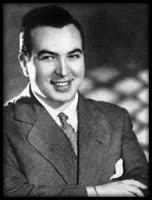
Singer: Carlos Acuña
Performance: Buenos Aires, August 2, 1941, RCA Victor, Record No. 39368 59686


Curated and Translated by Luigi Seta


Tango Talks! (El tango nos habla)

¿Por qué muere el amor? Esta es la pregunta que este tango trata de responder… Cuando iniciamos una relación empezamos a imaginarnos como será nuestro futuro al lado de esa persona… Solemos vibrar por ese amor, que nos calcina hasta los huesos y nos llena de esperanza y sueños. Pero a veces el sueño se termina y eso que nos hacía soñar desaparece de nuestras manos… ¿Con qué nos quedamos? El tango nos cuenta…


Why does love die? This is the question this tango will try to answer... At the start of a relationship we begin to imagine how our future will be with that person... We tend to vibrate for that love, which burns us to the bone filling ourselves with hope and dreams. But sometimes the dream is over and that which made us dream disappears from our hands... What do we have left? Let's listen... Tango is telling to us…


Acerca del cantor / About the singer Carlos Acuña

Su recia estampa en la que se funde la más auténtica personalidad del cantor de tango. Esa voz profunda y alta, respetuosa del giro natural de la canción porteña. El espíritu de zorzal que lo empuja a llevar su canto a todos los rumbos. Por todas estas cosas, Carlos fue y será uno de nuestros cantores más expresivos.

His strong image reflects the most authentic personality of the tango singer.. That deep and high pitched voice, is respectful of the natural characteristics of tango. His spirit that pushes him to carry his song in all directions. For all these things, Carlos was and will be one of our most expressive singers.

Debutó en Radio París, en 1933, usando el seudónimo Carlos Dillon, compartiendo las audiciones con Ignacio Corsini y Tita Galatro, entre otros. Cierta vez, un carnicero amigo le critica el seudónimo: ¿Cómo un cantor nacional iba a tener un nombre inglés? A partir de entonces, adopta su nombre artístico definitivo, Carlos Acuña, apellido que tomó de su crítico amigo. Gracias a su éxito, en 1939 actúa en cinco de las principales radios porteñas.

He debuted on Radio Paris, in 1933, using the pseudonym of Carlos Dillon, sharing performances with Ignacio Corsini and Tita Galatro, among others. Once, a butcher friend  criticizes the pseudonym: How a national singer would have an English name? From then on, he adopted his definitive artistic name, Carlos Acuña, a last name he took from his critical friend. Thanks to his success, in 1939 he performed in five of the main Buenos Aires radio stations.

En junio de 1941, es escuchado por Carlos Di Sarli, quien lo llama para invitarlo a tomarle una prueba con su orquesta. El cantor es aceptado y debuta formando rubro vocal con Roberto Rufino. Actúan en Radio El Mundo, realizan giras por el interior del país y fueron una gran atracción en el cabaret Marabú. El 2 de agosto de 1941, graba, para el sello Victor, su único registro con Di Sarli: el tango “Cuando el amor muere” (de Alfredo Malerba y Héctor Marcó). Se desvincula del maestro Di Sarli en 1942.

In June 1941, he is heard by Carlos Di Sarli, who invites him to take a test with his orchestra. The singer is accepted and debuted forming a vocal line with Roberto Rufino. They perform at Radio El Mundo, tour the interior of the country and were a great attraction at the Marabú cabaret. On August 2, 1941, he recorded, for the Victor label, his only record with Di Sarli: the tango "Cuando el amor muere" (When love dies). He dissociated himself from maestro Di Sarli in 1942.

Entabla una profunda amistad con el General Juan Perón, quien se encontraba exiliado en Madrid, y se convierte en su delegado personal. En esa condición, hace algunos viajes a la Argentina. Tuvo una dilatada carrera internacional especialmente en Europa, hasta 1990. Los últimos años de su vida, los pasa en Buenos Aires, pero ya su voz y su salud habían declinado.

He establishes a deep friendship with General Juan Perón, who was exiled in Madrid, and becomes his personal delegate. In that condition, he makes some trips to Argentina. He had a long international career especially in Europe, until 1990. He spent in Buenos Aires the last years of his life, but his voice and health had already declined.


Cuando El Amor Muere Tango 1941


Castellano:


Sin paz, por este amor vencido
dejé otro amor a la distancia,
en éste me abrazó la vida
y al otro dos manitas blancas.
Las brujas del dolor sentencian,
y entre dos fuegos van mis ansias;
quisiera ahogar esta pasión
tender mis alas y partir,
pero me grita el corazón.

Una sola vez se vive.
Una sola vez se ama,
y no hay gloria más sublime
que sufrir por un amor;
pero cuando ese amor muere
otro al alma no regresa,
porque esta pasión nos besa
una sola vez, y adiós.


*Perdóname, Señor, si olvido
en estos labios otros ruegos,
no supe de este amor dormido
que van con él mis propios sueños.

Pero, hoy, que enamorado vivo,
por este amor todo me juego,
que no se vence a una pasión
cuando es ardiente la ansiedad
y así nos dice el corazón.*
English:


Without peace, for this defeated love
I left another love in the distance,
in this love life embraced me,
in the other, two little white hands.
Sorceresses of pain sentenced,
and between two fires my anxieties go;
I would like to drown this passion
spread my wings and leave,
but my heart screams.

Only once you live,
Only once do you love,
and there is no more sublime glory
that suffering for love;
but when that love dies
another love do not return to the soul,
because passion kisses us
only once, and goodbye.

*Forgive me, Lord, if I forget
in these lips other prayers,
I did not know about this dormant love
that my own dreams go with it.

But, today, that I'm living in love,
for this love I risk everything ,
which is not beaten by a passion
when anxiety is fervent
so. this way, the heart tells us.*
* Esta parte de la letra no está cantada por Acuña, pero contribuye al mensaje del tango.
*This part of the lyrics is not sung by Acuña, but contributes to the tango message. 


Danced by Noelia Hurtado and Carlitos Espinoza

Noelia y Carlitos, Carlitos y Noelia... interpretan la historia de este tango como debe ser, no solo aportando gran musicalidad y técnica, si no puro sentimiento. Imposible de olvidar! ¡Suerte para nosotros!

16th Lisbon Tango Festival 2018
Lisbon, Portugal.

Noelia and Carlitos, Carlitos and Noelia ... interpreting the story of this tango in the way that should be, nt only wht their great musicality and technique, but floding our hearts with their passion and sentiment. Impossible to forget! Lucky us!


Ahora este tango en una tanda... Now this song in a tanda...


Thursday, February 1, 2018

El Bazar de los Juguetes (The Toy Store)

Tango 1954
Music: Roberto Rufino, Alberto Podestá
Lyrics: Reinaldo Yiso
Orchestra: Miguel Caló
Singer: Alberto Podestá
This performance: Buenos Aires, May 5,1954 - Odeon Disco Nacional No. 55937 19474


Curated and Translated by Luigi Seta


Tango Talks! (El tango nos habla)


Esta letra de Reinaldo Yiso, siempre cala muy hondo entre aquellos que en su niñez han tenido que convivir con la pobreza a su lado. Es un bello poema que describe cuantas veces, cuantas caritas de niños tristes han tenido que resignarse a tener ese pequeño juguete que soñaban.

This lyrics by Reinaldo Yiso, always goes deep among those who in their childhood have had to coexist side to side with poverty. It is a beautiful poem that describes how many times, how many little faces of sad children have had to resign themselves to having that little toy they dreamed.


A la belleza de la letra, se le suma una creación musical no menos bella, que como curiosidad fue realizada por dos excelentes cantantes, los Maestros Roberto Rufino y Alberto Podestá.

To the beauty of the lyrics, a musical creation is added no less beautiful, that as curiosity it was made by two excellent singers, the Maestros Roberto Rufino and Alberto Podestá.

Ahora dejémonos enternecer al escuchar este tango…
Now let’s be touched when listening to this tango...


Acerca del cantor Alberto Podestá / About the singer Alberto Podestá


Dijo en una entrevista reciente “Las cuatro primeras obras que grabé con Miguel Caló lo hice con el nombre de Juan Carlos Morel, ya que había otros cantores con el apellido Podestá, que es el de mi madre, Caló no quiso entrar en competencia de apellidos.”


He said in a recent interview: “The first four works that I recorded with Miguel Caló I did with the name Juan Carlos Morel, as there were other singers with surname Podesta, who is my mother, Caló didn't want to go into competition surnames.”


Actuaba en el viejo cabaret Singapur, ubicado en Corrientes y Montevideo. Yo vivía en la calle Piedras casi esquina Alsina. Entre uno y otro lugar los primeros viajes los hacía en tranvía. Luego que comencé a ganar las primeras “rupias” lo hice en taxi.”


I performed in the old Singapore cabaret, located in Corrientes Avenue and Montevideo Street. I used to lived on the Piedras Street at the corner of Alsina Street. In between the places I first travelled by tramway. Then when I started winning the first "rupee" (slang for money) I did ride taxis."


En 2007 fue declarado Ciudadano Ilustre de la Ciudad de Buenos Aires en el Salón Dorado de la Legislatura Porteña. En 2008, fue convocado por el director Miguel Kohan para protagonizar el proyecto cinematográfico Café de los maestros, con el que cantó en el Teatro Colón, Teatro Argentino y el Luna Park.


In 2007 he was declared Illustrious Citizen of Buenos Aires in the Golden Hall of the City Legislature. In 2008, he was called by director Miguel Kohan to star in the film project Café of the Maestros, with whom he sang at the Teatro Colón, Teatro Argentino and the Luna Park.


Él fue una de las últimas leyendas vivientes de la Época de Oro. En los últimos años, a pesar de nunca haber dejado su carrera, continuó con presentaciones en recitales esporádicos y participando varias orquestas de músicos jóvenes. Alberto Podestá nos dejo fisicamente el 9 de diciembre de 2015 a los 91 años de edad. Pero sigue vivo en nuestros corazones!


He was one of the last living legends of the Golden Age. In recent years, despite never having left his career, he continued with appearances in sporadic recitals and participating in several orchestras of young musicians. Alberto Podestá physically left us on December 9, 2015 at 91 years of age. But still alive in our hearts!


El Bazar de los Juguetes
Tango - 1954


Castellano:


Patrón cierre la puerta, porqué mira asombrado,
le compro los juguetes que tiene en el bazar.
Yo se los compro todos, no importa lo que gasto,
dinero no me falta para poder pagar.
Por una sola noche yo quiero ser rey mago,
para que los purretes de todo el arrabal
mañana al despertarse aprieten en sus manos
el sol de esta alegría que yo les quiero dar.


Al bazar de los juguetes,
cuantas veces de purrete,
me acercaba para ver.
Para ver de allí, de afuera,
desde atrás de esa vidriera
lo que nunca iba a tener.
Si mi vieja era tan pobre
le faltaba siempre un cobre
para comprarnos el pan.
Y hoy que puedo,
que la suerte me sonríe,
yo no quiero que haya un pibe
que no tenga
ni un juguete pa' jugar.


Yo sé lo que es sentirse en una Nochebuena,
teniendo por regalo un solo cacho 'e pan,
sabiendo que los otros, cruzando la vereda,
dejaban sus juguetes allí, en medio del zaguán.
Yo sé lo que es sentirse besado tiernamente
por una pobre madre que no me pudo dar
ni el más humilde y pobre de todos los juguetes
por eso se los compro por eso nada más.
English:


Mister, close the door, why you look at me in amazement,
I buy all the toys you have in the store.
I buy them all, no matter what I spend,
I have enough the money to pay.
For only one night I want to be one of the Wise Men,
so the kids of the suburb
tomorrow, when they wake up, can hold
this joy that I want to give them.


To the toy store,
how many times, as a kid,
I approached to see...
To see from there, from the outside,
from behind that window
what I would never have.
If my old lady was so poor
she always lacked a penny
to buy us bread.
And today that I can,
that luck smiles at me,
I do not want even one kid
not having
a toy to play.


I know what it feels like to be on a Christmas Eve,
having as a gift a single piece of bread,
knowing that the others, crossing the street,
they left their toys there, in the middle of the house.
I know what it is to feel tenderly kissed
for a poor mother who could not give me
nor the most humble and poor of all the toys
that's why I buy them all,  for that, nothing else.


Danced by Amanda and Adrián Costa


Amanda y Adrián Costa son unos de los intérpretes y maestros de tango argentino más influyentes y queridos del estilo Villa Urquiza.

Ellos transmiten con pasión y autenticidad este patrimonio, así como los aspectos socioculturales del baile del tango de salón: estudio de su música, códigos e historia.

Su estilo dinámico de baile, lleno de delicadeza y gracia, es el resultado de un trabajo de notable tecnicismo y musicalidad.

Fondation Villa Urquiza
2013 - France

Amanda and Adrián Costa are some of the most influential and beloved Argentinian tango masters and interpreters of the Villa Urquiza style.
They transmit this heritage with passion and authenticity, as well as the socio-cultural aspects of tango de salon dance: study of its music, codigos and history.

His dynamic style of dance, full of delicacy and grace, is the result of a work of remarkable technicality and musicality.


© Luigi Seta