Showing posts with label Carlos Espinoza. Show all posts

Sunday, March 31, 2019

Bien Pulenta / I Am Like This

Tango 1950


Composer: Juan D’Arienzo / Héctor Varela
Lyrics: Carlos Waiss
Orchestra: Juan D’Arienzo
Singer: Alberto Echague
Performance: Buenos Aires, May 5, 1950, RCA Victor (Green & Gold "Double Circle" Label), Shellac Record No. 68-0224-A


Curated and Translated by Luigi Seta


Tango Talks! (El tango nos habla)

La letra de este tango nos habla de la nobleza de estos compadritos tangueros, que aunque anduvieran por caminos non-sanctos, rozando lo delictivo, siempre era primordial para ellos la lealtad para sus amigos que se reflejaba en la nobleza de sus acciones para con ellos. Los códigos se respetaban a rajatabla y formaban la espina dorsal de la “tangueidad”.


The lyrics of this tango speak of the nobility of these "tanguero compadritos", that even if they walked into Non-Sancto paths, bordering on the unlawful, the loyalty to their friends was always paramount for them, reflected in the transparency of their actions .These codes (códigos) were strictly respected and formed the backbone of the "tangueidad" (all things related to tango, beyond its music and dance).

Debo hacer notar que la mayoría de esta letra está escrita con palabras del léxico del Lunfardo (puede encontrarse aquí más sobre esta jerga), que al ser traducida al inglés pierde un tanto su característica sarcástica o su giro ruisueño, pero más allá de las barreras idiomáticas he tratado de preservar su esencia. Espero les guste!

I should make note that the majority of the lyrics is written with words from the Lunfardo lexicon (you can find more about this jargon here), which when translated into English loses a bit its sarcastic characteristic or its amusing turn, but beyond the language barriers I have tried to preserve its essence. Hope you like it!

© Luigi Seta


Acerca del Cantante / About the Singer Alberto Echagüe


En la primera infancia, Alberto Echagüe comenzó a cantar en la ciudad de Rosario (la ciudad más importante de la provincia de Santa Fe, a 300 km de Buenos Aires). A principios de los años treinta, Echagüe se mudó a Buenos Aires desde su ciudad natal de Rosario y debutó en Radio Stentor con su nombre artístico Alberto Echagüe.


In his early childhood Alberto Echagüe started singing in the city of Rosario (the most important city in the province of Santa Fe, 300 km far from Buenos Aires). At the beginning of the thirties Echagüe moved to Buenos Aires from his hometown and debuted in Radio Stentor with his artistic name Alberto Echagüe.


En el año 1932, fue cantante en la orquesta de Ángel D'Agostino, actuando en el cabaret Casanova y en el Teatro de París. El mismo D'Agostino fue quien lo presentó a Juan D'Arienzo, este último invitó a Echagüe a Radio El Mundo para escuchar a su orquesta. Allí se encendió la chispa de uno de los equipos más populares de los años cuarenta: D'Arienzo-Echagüe.


In the year 1932, he was singer in the Ángel D'Agostino orchestra, performing at the Casanova cabaret and at the París Theater. D'Agostino himself was who introduced him to Juan D'Arienzo, the latter invited Echague to Radio El Mundo to listen to his orchestra. There the spark of one of the teams most popular of the forties was lighted: D'Arienzo-Echagüe.


Es verdad; Echagüe no fue técnicamente un gran cantante y más aún si hacemos una comparación con la excelencia vocal que abundó en los años cuarenta. Pero reconozcamos que cuando la velocidad de Juan D'Arienzo lo permitió, una voz sensible, dramática a veces, parecía capaz de contar sabiamente las historias en las letras.


It is true; Echagüe was not technically a great singer and even more if we make a comparison with the vocal excellence that abounded in the forties. But let us recognize that when Juan D'Arienzo´s speed allowed it, a sensitive voice, dramatic at times, appeared capable of wisely telling the story in the lyrics.


Era el cantante más importante de la orquesta, en cuanto a la caja, pero, además, era un caballero, un hombre honesto al que la fama nunca cambió y que, a pesar de las desventajas de su carrera artística, logró criar una familia. y ser amado por todos los que lo conocieron.

He was the singer most important of the orchestra, as for the cashbox, but furthermore, he was a gentleman, an honest man whom fame never changed and that, in spite of the disadvantages of his artistic career, he succeeded in bringing up a family and being loved by all those who knew him.


Tocaban en el cabaret Chantecler, en Radio El Mundo y en una gran cantidad de salones de baile y clubes. El boom fue increíble, comprometiéndose a registrar 27 números, comenzando con "Indiferencia", el 4 de enero de 1938, un hermoso tango de Juan Carlos Thorry y Rodolfo Biagi, finalizando esta etapa el 22 de diciembre de 1939 con "Trago Amargo" de Rafael Iriarte. y Alfredo Navarrine.


They played at the Chantecler cabaret, on Radio El Mundo and a great number of dancing salons and clubs. The boom was amazing, committing to record 27 numbers, starting with “Indiferencia”, on January 4, 1938, a beautiful tango by Juan Carlos Thorry and Rodolfo Biagi, ending this period on December 22, 1939 with “Trago Amargo” by Rafael Iriarte and Alfredo Navarrine.


La relación del cantante con El Rey del Compás tuvo varias etapas, que continuaron hasta el año 1975. La segunda etapa comenzó en 1944 y duró hasta 1957, es la más larga y la más exitosa. La orquesta era un huracán y el cantante no era menos. La calidad de los números es bastante desigual y el repertorio apuntaba a un auge comercial y no a un objetivo artístico.

Rare advertising from 1944
Mauré is leaving the orchestra and Echagüe re-entering it,
All together the same night with el Maestro!

The relationship of the singer with El Rey del Compás (The King of the Rythm) had various stages, which continued until the year 1975. The second period began in 1944 and lasted until 1957, it is the longest, and the most successful as well. The orchestra was a hurricane and the singer was no less. The quality of the numbers is quite uneven and the repertoire was aiming at a commercial boom and not at an artistic goal.


En 1968, comenzó la tercera y última etapa con el Maestro D'Arienzo, viajó a Japón y logró un éxito extraordinario. La historia divertida es que la orquesta viajó sin su líder, que tenía mucho miedo de viajar en avión. El maestro hubiera viajado a Japón si no fuera por ese trauma, en realidad, el propio emperador Hirohito lo invitó y le envió un cheque en blanco para que pudiera escribir la cantidad que le quisiera para ir a Tokio. Él le respondió que no se trataba de dinero sino de aviones!


In 1968, it began the third and final period with Maestro D'Arienzo, Mauré traveled to Japan and achieved an extraordinary success. The funny story is that the orchestra traveled without its leader, who was very afraid of traveling by plane. D’Arienzo would have traveled to Japan if it were not for that trauma, in fact, Emperor Hirohito himself invited the Maestro and sent him a blank check so he could write the amount he wishes to go to perform in Tokyo. He replied that it was not money but airplanes!


Bien Pulenta
Tango 1950


Castellano (and Lunfardo):


Estoy hecho en el ambiente de muchachos calaveras,
entre guapos y malandras me hice taura pa' tallar,
me he jugado sin dar pifia en bulines y carpetas,
me enseñaron a ser vivo muchos vivos de verdad.
No me gustan los boliches que las copas charlan mucho
y entre tragos se deschava lo que nunca se pensó.
Yo conozco tantos hombres que eran vivos y eran duchos
y en la cruz de cuatro copas se comieron un garrón.

Yo nunca fui shusheta
de pinta y fulería,
y sé lo que es jugarse
la suerte a una baraja
si tengo un metejón.
Le escapo a ese chamuyo
fulero y confidente
de aquéllos que se sienten
amigos de ocasión.
Yo soy de aquellas horas
que laten dentro 'el pecho,
de minas seguidoras,
Y de hombres bien derechos
tallando tras cartón.

Siempre sé tener conducta por más contra que me busquen,
aunque muchos se embalurden que soy punto pa' currar,
ando chivo con la yuta porque tengo mi rebusque
y me aguanto cualquier copo con las cartas que me dan.
No me gusta avivar giles que después se me hacen contra,
acostumbro escuchar mucho, nunca fui conversador.
Y aprendí desde purrete que el que nace calavera
no se tuerce con la mala, ni tampoco es batidor.
English:


I'm made in the environment of night-owls, dissipated men,
between felons and cuprits I had to be brave to impose myself.
I have taken a lot of risks without a single fail, in love nests and gambling houses.
I was taught how to be clever by real clever men.
I don’t like bars because alcohol makes people talk
and drinking you end confessing things you thought you wouldn’t.
I know a lot of men that were cunning and experimented
but because they drank too much, they found themselves in awkward situations.


I have never be a dandy,
those well-dressed and unloyal guys,
and I know how it is to gamble
“my luck to a deck”
if i have a crush with a girl.
I escape to that small talk
shoddy and confident
you have from people that pretend to be
your occasional friends.
I am a man from those good old times
that still beating inside the chest,
when women were loyal and committed,
And when men were trustworthy
immediately ready to help.


I always know how to keep myself calm not matter what they pretend from me,
even when some people make the mistake to think that I am an easily-deceived fool,
I am wary of the Police because my businesses are not very lawful
and I bravely stay in front of the attacks defending myself with all I have.
I don’t like teaching lessons to useless people because afterwards, they become rivals,
I am usually a good listener, I have never been a chatty one.
And I learnt since I was a kid that the man who is honest and loyal
doesn’t let himself to be corrupted by misfortune, nor becomes a betrayer.


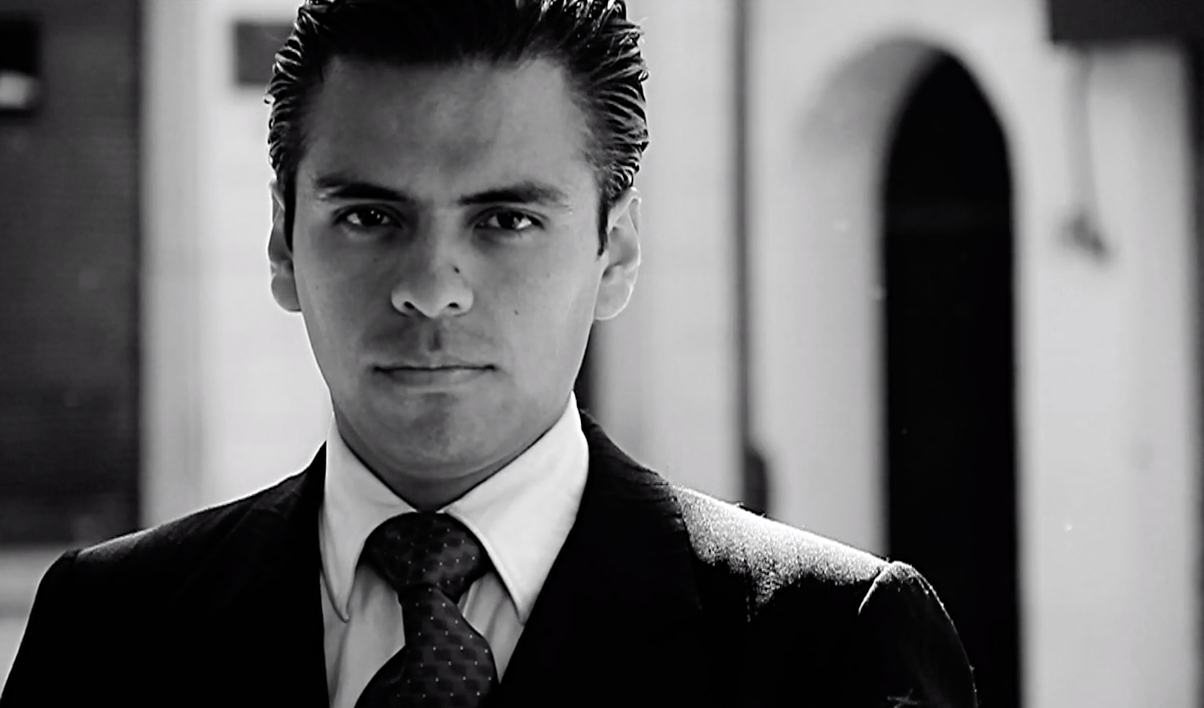
Danced by Noelia Hurtado and Carlitos Espinoza


De nuevo y de nuevo… como sólo ellos lo saben hacer… Carlitos con una perfecta interpretación del protagonista de la historia, (vean el momento en 2:02s) y Noelia sin dejar de lado su increíble musicalidad.  ¿Está Noelia tocando un imaginario teclado sobre el piso? Quedémonos atónitos… una vez más!


Brussels Tango Festival
Apr 25, 2015 


Again and again ... as only they know how to do it... Carlitos with a perfect interpretation of the protagonist of the story, (i.e.: see video point at 2:02s) and Noelia without leaving aside her incredible musicality. Is Noelia playing an imaginary keyboard on the floor? Let's be stunned... once again!


Friday, July 14, 2017

Rondando Tu Esquina (Hanging Around Your Street Corner)

Tango - 1945

Music: Charlo - Real name: Carlos José Pérez (de la Riestra)
Lyrics: Enrique Cadícamo
Orchestra: Osvaldo Pugliese
Singer: Roberto Chanel
This performance: Buenos Aires, Jul 18 1945 - Label Odeon Disco Nacional No. 7675 14782

Curated and Translated  by Luigi Seta


Tango Talks!  (Detrás de cada tango hay una historia… / Behind every tango there is a story...)

Dejar ir a quien queremos duele, eso no se discute… La vida se nos vuelve añicos, nos arrepentimos, lloramos, gritamos, nos desesperamos; volvemos a decirnos que fue la mejor decisión, pero inmediatamente se hace presente ese condenado “no” que nos regresa al inicio…

Letting go who we love hurts, that's beyond discussion..  Life is shattered, we repent, we cry, we shout, we despair,  We try to convince ourselves that it was the best decision,  but immediately it becomes present that damned "no" that returns us to the beginning...


Y así empiezan a transcurrir los días sin ella o él, como aprendiendo a vivir de nuevo. Nos cuesta aceptar que hemos estado jugando al fracaso… hasta que decidimos volver.  El tango nos había prevenido lo que íbamos a hacer... ¡no digamos que no!

And so begin the days without her or him , as learning to live again. It's hard for us to accept that we've been playing tricks... until we decide to go back. Tango had warned us what we were going to do... let's not say no!


Acerca del Autor de la Musica / About the Author of the Music
Charlo 

Después de Carlos Gardel, Charlo fue el cantor más importante que dio el tango, aunque, a diferencia de aquel, no se convirtió en un mito popular. En muchas de esas versiones alcanza un nivel parangonable al de Gardel. Como éste, contribuyó a establecer un estilo emocional pero austero, exento de efectismos, de perfecta afinación y cuidada musicalidad. Como compositor desplegó su gran talento de melodista, creando obras importantes en la línea del tango romanza.

After Carlos Gardel, Charlo was the most important singer that gave the tango, although, unlike him, he did not become a popular myth. In many of these versions reaches a level comparable to Gardel. Like this one, it contributed to establish an emotional style but austere, free of false efects, but perfect tuning and careful musicality. As a composer he displayed his great talent as a melodist, creating important works in the line of the tango romanza.

Nació en el seno de una familia adinerada. Durante toda su vida cultivaría costumbres burguesas, exhibiendo su estampa de dandy. Fue lo que los porteños llamaban un “jailaife” (derivación de high-life), de elaborada apariencia distinguida. Su refinado estilo dio origen a la moda Charlo, que abarcó la indumentaria y otros enseres masculinos.

Charlo

He was born into a wealthy family. Throughout his life he would cultivate bourgeois customs, exhibiting his dandy image. It was what the porteños called a "jailaife" (derivation of high-life), of elaborate distinguished appearance. His refined style gave rise to the Charlo fashion, which encompassed clothing and other men's apparel.

Charlo, de hermosa voz y clásica galanura, fue rápidamente absorbido por la industria que se movía en torno del tango y la música criolla. Tal como sucedió con Gardel, en los años '30 su arte fue cambiando el color local por una tesitura más universal. Esta transformación lo ayudará a triunfar en toda América, España y Portugal. Sus prolongadas giras y sus períodos de residencia en el exterior le restaron presencia en el tango argentino.

Charlo, of beautiful voice and classic “galanura”, was quickly absorbed by the industry that moved around the tango and the Creole music. As with Gardel, in the 1930s his art changed the local color by a more universal character. This transformation will help you to succeed throughout America, Spain and Portugal. His prolonged tours and his periods of residence abroad lost his presence in the Argentinean tango.

Su significativa obra de compositor, fue de una de rara aptitud para expresar musicalmente el drama humano y el arrebato romántico, como en el excelente tango “Rondando Tu Esquina”.

His significant work as a composer, it was of a rare ability to express musically the human drama and the romantic outburst, as in the excellent tango "Rondando Tu Esquina".


Rondando Tu Esquina 


Castellano:

Esta noche tengo ganas de olvidarla,
sin embargo que ansias locas de buscarla.
Ya no me importa el qué dirán
ni de las cosas que hablarán...
¡Total la gente siempre habla!
Yo no pienso más que en ella a toda hora.
Es terrible esta pasión devoradora.
Y ella siempre sin saber,
sin siquiera sospechar
mis deseos de volver...

¿Qué me has dado, vida mía,
que ando triste noche y día?
Rondando siempre tu esquina,
mirando siempre tu casa,
y esta pasión que lastima,
y este dolor que no pasa.
¿Hasta cuando iré sufriendo
el tormento de este amor?

*Este pobre corazón que no la olvida
me la nombra con los labios de su herida
y ahondando más su sinsabor
la mariposa del dolor
cruza en la noche de mi vida.
Compañeros, hoy es noche de verbena.
Sin embargo, yo no puedo con mi pena
y al saber que ya no está,
solo, triste y sin amor
me pregunto sin cesar.*
English:

Tonight I want to forget her,
but what a crazy urge to find her.
I don't care anymore what people will say
nor of the things they will sermon...
In fact, people always talk!
I think of her at all times.
This devouring passion is terrible.
And she without knowing,
without even suspecting
of my wishes to return...

What have you given me, my dear,
That I'm going sad night and day?
Always hanging around your street corner,
always looking at your house,
and this passion that hurts,
and this pain that does not go away.
Until when will I suffer
the torment of this love?

* This poor heart that does not forget her
and names her with the lips of its wound
and deepening its displeasure
the butterfly of pain
crosses the night of my life.
Comrades, today is verbena night.
However, I can't bear my suffering
and knowing that she is not here,
alone sad and without love,
I'm wondering incessantly.*

* Esta parte de la letra no está cantada, pero contribuye al mensaje del tango.
* This part of the lyrics is not sung, but contributes to the tango message.


Danced by Noelia Hurtado and Carlos Espinoza

Noelia es una bailarina con una inusual calidad de movimientos. Su danza, rápida y sensible modula las energías del bailarín y la música dance fusionándolas en un aura suave y delicada. Su formación como bailarina de tango tradicional ancla su estilo en la verdadera tradición del tango salón, pero con su suavidad y musicalidad extrema enriquece y lleva el tango a nuevos horizontes.

Noelia is a dancer with an unusual quality of movements. Her dance, fast and responsive modulates the energies of the dancer and the dance music fusing them into a soft and smooth aura.  Her training as a dancer of traditional tango anchors her style to the true uncompromising saloon tradition, but with her softness and extreme musicality enriches and brings tango to new horizons.


2015 Tango Festival in Sofia, Bulgaria. 

Carlitos Espinoza siempre fue un fanático del abrazo cerrado, definió su baile como una mezcla entre tradición y evolución, complementando la dinámica que el tango tiene hoy con las raíces del estilo milonguero tradicional.

Carlitos Espinoza  was always a fan of the closed embrace, he defines his dance as a mix between tradition and evolution, complementing the dynamics tango has today with its roots in the traditional milonguero style.


Sunday, March 15, 2015

Sin Lágrimas (Without Tears)

Tango

Music: Charlo
Lyrics: José María Contursi

This performance:
Orchestra: Osvaldo Pugliese
Singer: Roberto Chanel
Recorded: Buenos Aires, May 27, 1946, Odeon Industria Argentina - 7683 15536


Curated and Translated by Luigi Seta

Tango Talks! (El tango nos habla)

Qué hacer cuando un amor prohibido nos pide sin más olvidar todo el pasado, sin darse cuenta que no se puede seguir adelante con el corazón partido en dos... muriendo lentamente. Nuevamente el tango nos habla...


What to do when a forbidden love is asking us to forget all the past, not realizing that it’s not possible to move on with the heart cut in pieces... slowly dying.  Again, tango talks to us...


Acerca del Cantante / About the Singer
Roberto Chanel

Fue un cantor excelente, delicado, de una tibia dulzura, típico exponente de su época. Y sin embargo, no trascendió más allá del conocimiento de los cultores del tango, de los coleccionistas, a lo sumo, de los que vivieron su momento. Para los muy conocedores, fue el mejor vocalista de Pugliese, no el más popular ni el más famoso, si no el que mejor y con más calidad representó al maestro. Su versión del tango “Farol” de los hermanos Expósito es un clásico del género.

It was an excellent singer , delicate, with a warm sweetness, typical exponent of his time. And yet it did not extended his fame beyond the knowledge of tango artists , collectors,or at most, of those who lived their time. For the very knowledgeable, he was the best singer of Pugliese, not the most popular or the most famous, but the one that better represented the Maestro. His version of the tango "Farol" of the Expósitos brothers is a classic.

Su nombre real era Alfredo Mazzotti, alias El Turco. A mediados de 1939 y para incorporarse a la orquesta e Osvaldo Pugliese, el cantor adopta el nombre artístico Roberto Chanel por una idea de Julio Jorge Nelson que se inspiró en un cartel de publicidad de una joyería.


His real name was Alfredo Mazzochi, alias El Turco. In the mid-1939’s and to join the orchestra of Osvaldo Pugliese, the singer takes the stage name of Roberto Chanel for an idea of Julio Jorge Nelson ( a leading lyricist and composer) was inspired by a poster advertising a jewelry store.

La investigadora Nélida Rouchetto lo definió así: «Con sus arrastres nasales, su canyengue y su dicción de hombre de pueblo mantenía frescas las raíces populares que crearon la música ciudadana. Fue Chanel quien se identificó como un instrumento de la orquesta, al modo de una viola, como puede comprobarse desde su primera grabación».

The researcher Nelida Rouchetto defined it thus: "With his nasal trawls , his “canyengue” diction and man of the people characteristics he kept fresh the roots that created the popular urban music . It was Chanel who identified himself as an instrument of the orchestra, in the manner of a viola, as can be seen from his first recording".


Castellano:

No sabes cuánto te he querido,
como has de negar que fuiste mía;
y sin embargo me has pedido
que te deje, que me vaya,
que te hunda en el olvido.

Ya ves, mis ojos no han llorado,
para qué llorar lo que he perdido;
pero en mi pecho desgarrado...
sin latidos, destrozado,
va muriendo el corazón.

Ahora, que mi cariño es tan profundo,
Ahora, quedo solo en este mundo;
qué importa que esté muriendo y nadie venga
a cubrir estos despojos, ¡qué me importa
de la vida! Si mi vida está en tus ojos.

Ahora que siento el frío de la muerte,
ahora que mis ojos no han de verte...
qué importa de que otro tenga tus encantos,
si yo se que nunca nadie puede amarte
tanto, tanto como yo te amé.

Pero en mi pecho desgarrado...
sin latidos, destrozado,
va muriendo el corazón.
English:

You don’t know how much I loved you,
How can you deny that you were mine;
however you asked me
to leave you, to go away,
to sink you into forgetfulness.

You see, my eyes haven't cried,
why to mourn what I have lost;
but in my torn chest...
with no beats, ripped,
the heart is dying.

Now, that my love is so deep,
Now, I'm left alone in this world;
doesn't matter that I’m dying and no one comes
to cover these spoils , I don’t care
about life! If my life is in your eyes.

Now that I feel the chill of death,
now that my eyes are not going to see you...
Doesn't matter If somebody will have you
if I know that no one can love you
so as much as I loved you .

But in my torn chest...
with no beats, ripped,
the heart is dying.


Danced by Carlitos Espinoza & Noelia Hurtado

Excepcional interpretación de la letra de este tango, bailado con el corazón en la mano… La musicalidad esta vez deja el protagonismo al sentimiento. Bravo!


Ljubljana International Tango Festival
Slovenia - 2013

Exceptional interpretation of the story of this tango, danced with heart in hand ... The musicality this time let the spotlight to the feelings. Bravo!


Now this tango in a tanda...


© Luigi Seta