Thursday, February 1, 2018

El Bazar de los Juguetes (The Toy Store)

Tango 1954
Music: Roberto Rufino, Alberto Podestá
Lyrics: Reinaldo Yiso
Orchestra: Miguel Caló
Singer: Alberto Podestá
This performance: Buenos Aires, May 5,1954 - Odeon Disco Nacional No. 55937 19474


Curated and Translated by Luigi Seta


Tango Talks! (El tango nos habla)


Esta letra de Reinaldo Yiso, siempre cala muy hondo entre aquellos que en su niñez han tenido que convivir con la pobreza a su lado. Es un bello poema que describe cuantas veces, cuantas caritas de niños tristes han tenido que resignarse a tener ese pequeño juguete que soñaban.

This lyrics by Reinaldo Yiso, always goes deep among those who in their childhood have had to coexist side to side with poverty. It is a beautiful poem that describes how many times, how many little faces of sad children have had to resign themselves to having that little toy they dreamed.


A la belleza de la letra, se le suma una creación musical no menos bella, que como curiosidad fue realizada por dos excelentes cantantes, los Maestros Roberto Rufino y Alberto Podestá.

To the beauty of the lyrics, a musical creation is added no less beautiful, that as curiosity it was made by two excellent singers, the Maestros Roberto Rufino and Alberto Podestá.

Ahora dejémonos enternecer al escuchar este tango…
Now let’s be touched when listening to this tango...


Acerca del cantor Alberto Podestá / About the singer Alberto Podestá


Dijo en una entrevista reciente “Las cuatro primeras obras que grabé con Miguel Caló lo hice con el nombre de Juan Carlos Morel, ya que había otros cantores con el apellido Podestá, que es el de mi madre, Caló no quiso entrar en competencia de apellidos.”


He said in a recent interview: “The first four works that I recorded with Miguel Caló I did with the name Juan Carlos Morel, as there were other singers with surname Podesta, who is my mother, Caló didn't want to go into competition surnames.”


Actuaba en el viejo cabaret Singapur, ubicado en Corrientes y Montevideo. Yo vivía en la calle Piedras casi esquina Alsina. Entre uno y otro lugar los primeros viajes los hacía en tranvía. Luego que comencé a ganar las primeras “rupias” lo hice en taxi.”
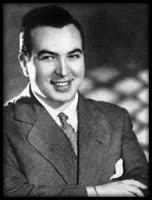


I performed in the old Singapore cabaret, located in Corrientes Avenue and Montevideo Street. I used to lived on the Piedras Street at the corner of Alsina Street. In between the places I first travelled by tramway. Then when I started winning the first "rupee" (slang for money) I did ride taxis."


En 2007 fue declarado Ciudadano Ilustre de la Ciudad de Buenos Aires en el Salón Dorado de la Legislatura Porteña. En 2008, fue convocado por el director Miguel Kohan para protagonizar el proyecto cinematográfico Café de los maestros, con el que cantó en el Teatro Colón, Teatro Argentino y el Luna Park.


In 2007 he was declared Illustrious Citizen of Buenos Aires in the Golden Hall of the City Legislature. In 2008, he was called by director Miguel Kohan to star in the film project Café of the Maestros, with whom he sang at the Teatro Colón, Teatro Argentino and the Luna Park.


Él fue una de las últimas leyendas vivientes de la Época de Oro. En los últimos años, a pesar de nunca haber dejado su carrera, continuó con presentaciones en recitales esporádicos y participando varias orquestas de músicos jóvenes. Alberto Podestá nos dejo fisicamente el 9 de diciembre de 2015 a los 91 años de edad. Pero sigue vivo en nuestros corazones!


He was one of the last living legends of the Golden Age. In recent years, despite never having left his career, he continued with appearances in sporadic recitals and participating in several orchestras of young musicians. Alberto Podestá physically left us on December 9, 2015 at 91 years of age. But still alive in our hearts!


El Bazar de los Juguetes
Tango - 1954


Castellano:


Patrón cierre la puerta, porqué mira asombrado,
le compro los juguetes que tiene en el bazar.
Yo se los compro todos, no importa lo que gasto,
dinero no me falta para poder pagar.
Por una sola noche yo quiero ser rey mago,
para que los purretes de todo el arrabal
mañana al despertarse aprieten en sus manos
el sol de esta alegría que yo les quiero dar.


Al bazar de los juguetes,
cuantas veces de purrete,
me acercaba para ver.
Para ver de allí, de afuera,
desde atrás de esa vidriera
lo que nunca iba a tener.
Si mi vieja era tan pobre
le faltaba siempre un cobre
para comprarnos el pan.
Y hoy que puedo,
que la suerte me sonríe,
yo no quiero que haya un pibe
que no tenga
ni un juguete pa' jugar.


Yo sé lo que es sentirse en una Nochebuena,
teniendo por regalo un solo cacho 'e pan,
sabiendo que los otros, cruzando la vereda,
dejaban sus juguetes allí, en medio del zaguán.
Yo sé lo que es sentirse besado tiernamente
por una pobre madre que no me pudo dar
ni el más humilde y pobre de todos los juguetes
por eso se los compro por eso nada más.
English:


Mister, close the door, why you look at me in amazement,
I buy all the toys you have in the store.
I buy them all, no matter what I spend,
I have enough the money to pay.
For only one night I want to be one of the Wise Men,
so the kids of the suburb
tomorrow, when they wake up, can hold
this joy that I want to give them.


To the toy store,
how many times, as a kid,
I approached to see...
To see from there, from the outside,
from behind that window
what I would never have.
If my old lady was so poor
she always lacked a penny
to buy us bread.
And today that I can,
that luck smiles at me,
I do not want even one kid
not having
a toy to play.


I know what it feels like to be on a Christmas Eve,
having as a gift a single piece of bread,
knowing that the others, crossing the street,
they left their toys there, in the middle of the house.
I know what it is to feel tenderly kissed
for a poor mother who could not give me
nor the most humble and poor of all the toys
that's why I buy them all,  for that, nothing else.


Danced by Amanda and Adrián Costa


Amanda y Adrián Costa son unos de los intérpretes y maestros de tango argentino más influyentes y queridos del estilo Villa Urquiza.

Ellos transmiten con pasión y autenticidad este patrimonio, así como los aspectos socioculturales del baile del tango de salón: estudio de su música, códigos e historia.

Su estilo dinámico de baile, lleno de delicadeza y gracia, es el resultado de un trabajo de notable tecnicismo y musicalidad.

Fondation Villa Urquiza
2013 - France

Amanda and Adrián Costa are some of the most influential and beloved Argentinian tango masters and interpreters of the Villa Urquiza style.
They transmit this heritage with passion and authenticity, as well as the socio-cultural aspects of tango de salon dance: study of its music, codigos and history.

His dynamic style of dance, full of delicacy and grace, is the result of a work of remarkable technicality and musicality.


© Luigi Seta


Saturday, September 30, 2017

Muñequita De París (Doll Of Paris)

Tango 1955

Music: José Ranieri
Lyrics: José Rótulo
Orchestra: Osvaldo Fresedo
Singer: Héctor Pacheco
This performance: Buenos Aires, January 6, 1955, Odeón Disco Nacional, Record No. 51887-B


Curated and Translated by Luigi Seta


Tango Talks! (El tango nos habla)

Qué hacer cuando hemos vivido en vida algo tan hermoso como un sueño, pero tan fugaz que ya con el tiempo transcurrido no sabemos si ha sido parte de nuestra realidad, o simplemente eso… un sueño. El Tango nos ayuda a evocar y a reflexionar sobre lo que ya no será jamás. Escuchemos.


What to do when we have lived in life something as beautiful as a dream, but so fleeting that already with the time elapsed we do not know if it has been part of our reality, or simply that... a dream. Tango helps us to evoke and reflect on what will never be. Let's listen.


Acerca del Cantante / About the Singer 
Héctor Pacheco

Fue dueño de un estilo elegante, distinguido, intimista. Escucharlo cantar significa imaginar lujosos locales nocturnos, grandes salones, salas de baile frecuentadas por las clases altas, hoteles de muchas estrellas donde los violines, el piano y los bandoneones acompañan a un cantor que recrea con su voz un mundo que ya no existe pero que siempre es agradable evocar. “En un mundo de alegría entre humo y copas de champagne” como dice en “Sollozos”, el poema escrito en 1922 por Emilio Fresedo.

He owned an elegant, distinguished, intimate style. To hear him sing means to imagine luxurious nightclubs, large halls, dance halls frequented by the upper classes, many stars hotels where violins, piano and bandoneones accompany a singer who recreates with his voice a world that no longer exists but which it is always pleasant to evoke. "In a world of joy between smoke and glasses of champagne" as it says in "Sollozos", the poem written in 1922 by Emilio Fresedo.

Su época de oro fueron los cinco años con Osvaldo Fresedo (1952-1957) y los dos o tres años con la orquesta de Carlos García. Diez años le alcanzaron y le sobraron para merecer el título de “Príncipe de Buenos Aires”. Los años anteriores y posteriores fueron la antesala o el epílogo de sus tiempos de brillo y esplendor.

His golden age was the five year tenure with Osvaldo Fresedo (1952-1957) and two or three years with the orchestra of Carlos Garcia. Ten years were enough to deserve the title of "Prince of Buenos Aires". The years before and after were the anteroom or the epilogue of his times of brilliance and splendor.

“Vida Mía”, un poema escrito por Emilio Fresado en 1933, fue su tema clásico, el que solicitaban sus incondicionales que nunca sumaron multitudes pero que siempre fueron leales a su Príncipe. Se dice que su caudal vocal era modesto, pero que se las ingeniaba con otros recursos para suplantar los límites físicos. Puede ser. Lo que está fuera de discusión es que ese estilo “romántico”, delicado, algo abolerado, como decían sus críticos más severos, supo representar una época, a una clase social que reconocía en el ritmo de Fresedo y la voz de Pacheco una marca propia.

"Vida Mía", a poem written by Emilio Millado in 1933, was his classic theme, which his unconditional ones requested that never were huge crowds but always loyal to his Prince. It is said that his vocal flow was modest, but that he managed with other resources to overcome the physical limits. It can be. What is out of the question is that this "romantic" style, delicate, somewhat bolero style, as his harshest critics said, represented a time, a social class that recognized in the rhythm of Fresedo and the voice of Pacheco an own brand.

Pacheco siempre mantuvo aquella presencia distinguida que lo caracterizó. Aquella que hizo famosa en la orquesta de Osvaldo Fresedo. Donde no siendo el mejor vocalista logró el reconocimiento, por la refinada amalgama de su personalidad con la prestancia del Maestro, en la lujosa boite Rendez Vous (en francés: nuestra cita, ubicado en la calle Maipú entre Paraguay y la avenida Córdoba).

Pacheco always maintained the distinguished presence that characterized him. The one that made him famous in the orchestra of Osvaldo Fresedo. Where not being the best vocalist achieved recognition, by the refined amalgam of his personality with the Maestro's excellence, especially in the luxurious boite Rendez Vous (in French: our date, located in the Maipú Street, between Paraguay Street and Córdoba Avenue).


Muñequita De París


Castellano:


Muñeca de París,
varita de cristal,
tu paso fue fugaz,
fue breve, fue mortal,
tan breve como el cuento
que una vez oí decir,
de aquella princesita de marfil...


París...
en el embrujo de tu luz,
La vi...
pasar radiante la ilusión,
fue...
la princesita de marfil,
que cautivara mi niñez,
aquellos cuentos de París,
después...
la noche con su carrousel
de luz...
fue su delirio y fue su cruz,
yo...
en la ceguera de mi amor,
la vi...
quemarse en tu esplendor,
París...
English:


Doll of Paris,
crystal wand,
your presence was fleeting,
was brief, was mortal,
as brief as the story
which I once heard,
of that little ivory princess ...


Paris...
in the spell of its light,
I saw her...
radiating, the illusion passing by,
It was...
the ivory princess,
that captivated my childhood,
those tales of Paris,
after...
the night with its carrousel
of light...
it was her delirium and was her cross,
I...
in the blindness of my love,
I saw her...
burnt in the splendor,
of Paris...

Nota: la letra fue tomada directamente de la grabación.
Note: the lyrics were taken directly from the performance.


Y ahora este tango en una Tanda / A now this song in a Tanda

Tal vez la mejor de la Última Tanda, cuando la llegada del día nos marque el fin de la milonga. Perhaps the best of the Last Tanda, when the arrival of the day marks the end of the milonga.


Sunday, September 3, 2017

Sangre De Mi Sangre (Blood Of My Blood)

Tango 1954

Music: Reinaldo Yiso
Lyrics: Manuel Mañueco
Orchestra: Rodolfo Biagi
Singer: Hugo Duval
This performance: Buenos Aires, June 29,1954 - Odeon Disco Nacional No. 55986 19551


Curated and Translated by Luigi Seta


Tango Talks! (El tango nos habla)

Por qué seguimos ligados a personas que nos han hecho daño? ¿Qué hace, en cambio,  que las personas que nos trataron bien sean rápidamente olvidadas? Esta es quizás la pregunta del millón… Tratamos de evitar los lugares, los detalles evocadores, los rastros de la relación, cualquier cosa que nos recuerde a quien nos dañó. Y sin embargo... no podemos olvidar.

Why are we still attached to people who have hurt us? Why, on the other hand, people who have treated us well are quickly forgotten? This is the million dollar question... We try to avoid the places, the evocative details, the traces of the relationship, anything that reminds us of who harmed us... And yet... we can not forget.


En esta encrucijada sentimental podríamos cifrar el enganche a relaciones claramente destructivas, casi como si se tratara de una adicción y de una abstinencia que no podemos sobrellevar.

At this sentimental crossroads we could encrypt the coupling to clearly destructive relationships, as if it were an addiction and an abstinence that we could not cope.

A saber, ¿por qué cuando hemos sufrido infidelidades y maltratos volvemos a precipitarnos a situaciones similares? ¿Hay una salida? Hmm... El Tango nos lo trata de explicar… escuchemos.

Let’s see, why when we have suffered infidelities and mistreats, again we have to rush to similar situations? Is there a way out? Hmm... Tango is trying to explain this to us... let's listen.

© Luigi Seta


Acerca del Cantante / About the Singer 
Hugo Duval

Este cantor nacido en Buenos Aires, fue dueño de una bella voz, interpretaba con un personal fraseo y, también, supo expresar un sobrio dramatismo cuando así lo exigía la obra. Prácticamente, toda su carrera artística estuvo ligada al maestro Rodolfo Biagi con quien realizó sus más rutilantes éxitos.

This singer born in Buenos Aires, had a beautiful voice, interpreted with personal phrasing and also, knew how to express a sober drama when the thematic required that way. Practically, his entire artistic career was linked to Maestro Rodolfo Biagi with whom he made his most brilliant successes.

A los 17 años, comenzó sus actuaciones en distintos espectáculos barriales y a partir de 1948 en los cines, en los denominados «números vivos». Espacio artístico que por disposición de una ley nacional obligaba a los cines, en los intervalos, a presentar cantantes, músicos, cómicos, malabaristas y las más variadas manifestaciones artísticas.

At age 17, he began his performances in different neighborhood shows and from 1948 in cinemas, in the so-called "live performances". It was an artistic implemented by a national law forcing the cinemas, in the interludios, to present singers, musicians, comedians, jugglers and the most varied artistic manifestations.

Luego de los bailes de carnaval de 1950, se desvinculan de la orquesta de Rodolfo Biagi, los cantores Alberto Amor y Carlos Saavedra, quienes fueron reemplazados por Carlos Heredia que había estado con Gobbi y por Hugo Duval, ya con su nombre artístico.

After the 1950s carnival dances, the singers Alberto Amor and Carlos Saavedra were disbanded from the Rodolfo Biagi orchestra, and were replaced by Carlos Heredia who had been with Gobbi and Hugo Duval, already with his stage name.

Los cantores permanecieron juntos hasta 1953. Luego, Hugo quedó como la única voz de Biagi, hasta 1962. Resulta curioso pero explicable por el éxito de Duval, que de los 20 temas que graba la orquesta para el sello Odeon, trece los hace con el cantor, incluidos dos dúos con Heredia, quien como solista grabó dos temas y cinco son instrumentales.

The singers remained together until 1953. Then, Hugo remained as the only voice of Biagi, until 1962. It is curious but explainable by the success of Duval, that of the 20 tracks recorded by the orchestra for the Odeon label, thirteen were with the singer, including two duets with Heredia, who as a soloist recorded two songs; five were instrumentals.

En los años sesenta, muy difíciles para el tango, pese a ser tentado a seguir su carrera como solista, Duval permaneció con el Maestro hasta su última actuación, el 2 de agosto de 1969, en el baile realizado en el Club Hurlingham, de la Provincia de Buenos Aires, un mes antes que falleciera Biagi.

In the sixties, a very difficult time for tango, in spite of being tempted to follow his career as a soloist, Duval remained with the Maestro until his last performance, on August 2, 1969, at the performance in the Hurlingham Club, a month before Biagi died.


Sangre De Mi Sangre


Castellano:

Más fuerte que mi orgullo son tus ojos.
Más fuerte que tu engaño es mi pasión.
Prendida en mi existencia como abrojo
te burlas de mis sueños y mi amor...
Clavada como un garfio entre mi carne
palpitas, noche y día, siempre estás,
en vano es que pretenda rebelarme
la seda de tu carne puede más...

Inútil, cada vez te quiero más...
Te llamo, y jamás te he de olvidar...
Como sangre de mi sangre yo te siento
que aquí estás y tu ausencia me lastima
como hoja de un puñal...
Tus ojos, en mis ojos siempre están.
Yo siento, que te quiero... ¡y nada más!

*Me aprietan las cadenas de tu hastío.
Quisiera darte el cielo ¿y para qué?
El fuego de tus labios ya no es mío
todo eso lo he llegado a comprender...
En esa cerrazón de mi locura
me aferro a un imposible, sin razón.
Tú eres esa estrella inalcanzable
que ríe allá en el cielo de mi amor...*
English:

Your eyes are stronger than my pride.
Stronger than your betrayal is my passion.
Fixed to my existence as a brier,
you mock my dreams and my love..
Inserted like a hook in my flesh,
beating, night and day, you are always present,
it is in vain to intent a rebellion,
the silk of your flesh is more powerful...

It is in vain, every time... I love you more
I call you, and I will never forget you...
As blood of my blood I feel that
you are here and your absence hurts me
as a dagger’s blade...
Your eyes are always in my eyes.
I feel, that I love you... and nothing else!

*The chains of your ennui clings me.
I would like to give you the heaven, but for what?
The fire of your lips is no longer mine
that’s all I have come to understand...
In the closure of my madness
I’m hugging an impossible, without reason.
You are that unreachable star
that laughs there, in the sky of my love...*

* Esta parte de la letra no está cantada, pero ayuda a completar el mensaje del tango.
* This part of the lyrics is not sung, but helps to complete the tango's message.


Danced by Maja Petrovic & Marko Miljevic 

Aquí interpretado por estos dos jóvenes bailarines europeos en estilo milonguero "Apilado". Son conspicuos admiradores de sus primeros maestros Pablo Rodríguez y Noelia Hurtado.  Maja y Marko tienen un gran sentido musical que no carece de un gran sentimiento. ¡Bravo!

Unidentified venue
Jan 2013

Here interpreted by this two young European dancers in a “Apilado” milonguero style. They are conspicuous admirers of their first maestros Pablo Rodriguez and Noelia Hurtado. Maja and Marko have a great musical sense not devoided of a great sentiment. Bravo!


Now the story narrated in a tanda...